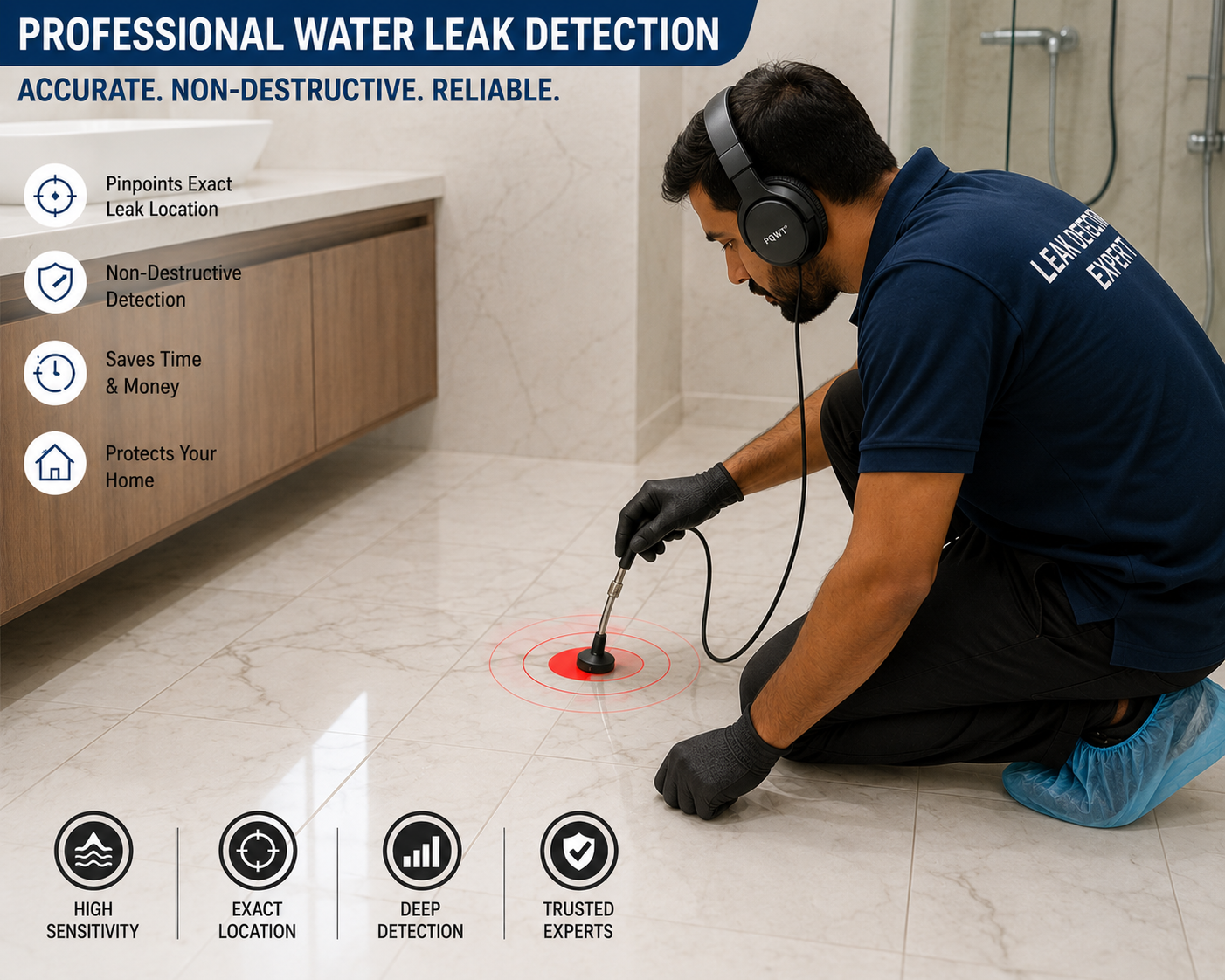
How to Find a Hidden Water Leak Without Wrecking Your Tiles
A sudden increase in your water bill or a damp patch appearing on a wall can quickly become a major concern. When a pipe starts leaking behind a wall or underneath your floor, finding the source often feels impossible.
For most homeowners, the biggest worry is not just the leak itself but the fear of breaking expensive tiles, damaging flooring, or opening walls just to locate a small pipe leak.
The good news is that modern leak detection technology makes it possible to find hidden leaks accurately without damaging your home. Professional technicians can locate the exact source of the problem while keeping your walls, floors, and tiles intact.
Early Warning Signs of a Hidden Water Leak
Because hidden pipes are out of sight, even a small leak can continue for weeks or months before becoming visible. During this time, water can damage walls, flooring, and building structures while encouraging mold growth.
If you suspect a leak, watch for these common warning signs:
1. Your Water Meter Keeps Moving
Turn off all taps, showers, and water-using appliances in your home. Check your main water meter. If the meter continues to move, water may be escaping somewhere in your plumbing system.
2. Unexpected Increases in Your Water Bill
If your water bill suddenly rises even though your water usage habits haven't changed, a hidden leak could be wasting water continuously.
3. A Musty Smell Indoors
Water trapped inside walls or floors creates ideal conditions for mold growth. A persistent damp or musty smell in a particular area is often a sign of hidden moisture.
4. Loose or Hollow-Sounding Floor Tiles
Water leaking beneath tiles can weaken the adhesive underneath. If tiles feel loose or make a hollow sound when tapped, moisture may be present below the surface.
5. Peeling Paint or Swollen Skirting Boards
Bubbling paint, peeling wallpaper, or soft wooden skirting boards are strong indicators that water is soaking the materials behind them.
Non-Destructive Methods Used to Find Hidden Leaks
The days of breaking walls and floors based on guesswork are over. Today, professional leak detection companies use advanced tools to locate leaks accurately without causing unnecessary damage.
1. Thermal Imaging Cameras
Water changes the temperature of the materials around it. Thermal imaging cameras detect these temperature differences and display them as images.
A leaking hot water pipe often appears as a warm area, while cold water leaks create cooler patterns that help technicians identify the leak location behind walls or under floors.
2. Acoustic Leak Detection
When water escapes from a pressurized pipe, it creates a small sound or vibration.
Using highly sensitive listening equipment and acoustic sensors, technicians can detect these sounds through walls, concrete, and flooring to identify the exact location of the leak.
3. Moisture Mapping
Specialized moisture meters can measure moisture levels inside walls, ceilings, and floors without drilling holes.
By taking readings from different areas, technicians create a moisture map that helps trace the water back to the source of the leak.
4. Pressure Testing
Plumbers can isolate different sections of the plumbing system and test them individually.
If a specific pipe section fails to hold pressure, it helps narrow down the search area and reduces unnecessary inspection time.
Why Breaking Tiles Based on Guesswork Is a Costly Mistake
Many homeowners assume that the leak is directly behind the damp patch they can see. In reality, water often travels along pipes, walls, or floor channels before becoming visible.
As a result, breaking tiles or walls in the wrong location can lead to unnecessary damage, higher repair costs, and difficulty finding matching replacement tiles.
Meanwhile, the actual leak may continue hidden elsewhere.
The Smart Solution
Using modern, non-invasive leak detection technology allows professionals to locate hidden leaks quickly and accurately without damaging your property.
Instead of breaking multiple tiles or walls, repairs can be carried out only at the exact location where the leak exists. This saves time, reduces repair costs, and protects your home from unnecessary damage.
If you notice damp walls, rising water bills, or unexplained moisture in your home, early leak detection can prevent small problems from turning into expensive repairs.


